
Economics, B.S. Degree
Our B.S. in Economics offers rigorous training in microeconomic and macroeconomic theory, econometrics, statistical modeling, and applied economic analysis. Compared to the Economics B.A. degree, the B.S. places a stronger emphasis on advanced mathematics, data analysis, and research design, preparing students to engage deeply with the mathematical and statistical foundations of modern economic inquiry. Students can tailor their degree through a specialization in Quantitative Economics Emphasis, which focuses on data-driven decision making and empirical modeling, or Economic Analysis and Policy Emphasis, which explores how institutions and policy interventions influence economic outcomes.
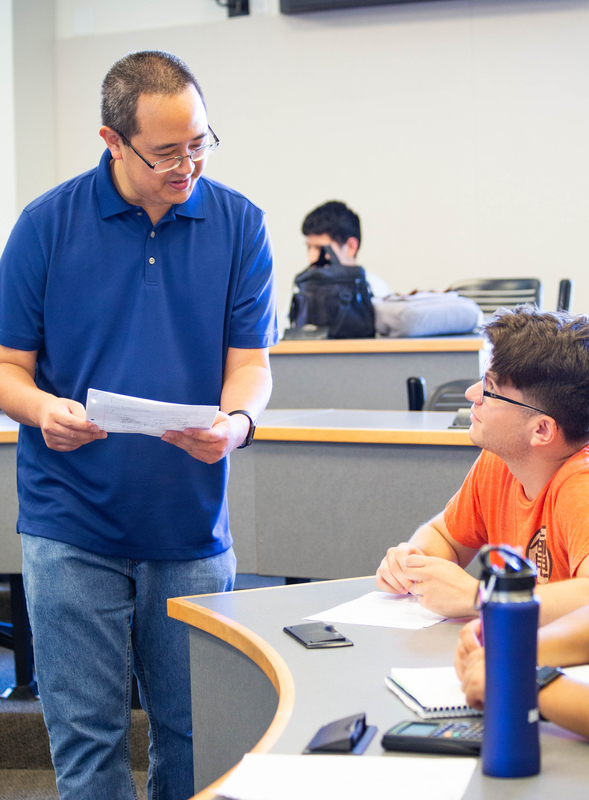 Students learn to analyze economic relationships, build and test theories using real-world data, and apply quantitative tools (such as calculus and econometrics) to derive insights that inform business strategy and policy evaluation. Coursework balances theory and application, enabling students to assess global economic, political, and social environments through a rigorous analytical lens. Opportunities for undergraduate research, internships, and professional engagement further strengthen students’ preparation for the workforce or graduate study.
Economics majors from UC Merced develop exceptional analytical, quantitative, and problem-solving abilities that are highly valued across industries. Graduates pursue careers in finance, consulting, banking, business analytics, government, law, technology, economics research, and nonprofit organizations. Because economics cultivates strong statistical reasoning, strategic thinking, and communication skills, employers in nearly every sector actively seek economics graduates. Many students also continue on to graduate programs in economics, public policy, business, or law, where economics majors consistently perform well in entrance exams and advanced study.
Major Program Requirements: Economics, Economic Analysis and Policy emphasis, B.S.
Lower Division Major Requirements [28 Units]
Lower Division Major Core Requirement [8 units]
Complete the following two courses:
-
ECON 001: Introduction to Economics: 4 Units
-
ECON 010: Statistical Inference: 4 Units
Mathematics Requirement [8 units]
Complete one of the following series of courses:
-
MATH 011: Calculus I: 4 Units AND MATH 012: Calculus II: 4 Units
-
MATH 021: Calculus I for Physical Sciences and Engineering: 4 Units AND MATH 022: Calculus II for Physical Sciences and Engineering: 4 Units
Computer Science Requirement [4 units]
Complete one of the following options:
-
CSE 020: Introduction to Computing I: 2 Units AND CSE 021: Introduction to Computing II: 2 Units
-
BIOE 021: Computing for Bioengineers: 4 Units
Introductory Social Science Requirement [4 units]
Complete one of the following options:
-
ANTH 001: Introduction to Sociocultural Anthropology: 4 Units
-
COGS 001: Introduction to Cognitive Science: 4 Units
-
PH 001: Introduction to Public Health: 4 Units
-
PH 005: Global and International Public Health: 4 Units
-
POLI 001: Introduction to American Politics: 4 Units
-
PSY 001: Introduction to Psychology: 4 Units
-
SOC 001: Introduction to Sociology: 4 Units
Introductory Natural Science Requirement [4 units]
Complete one of the following courses:
-
ANTH 005: Introduction to Biological Anthropology: 4 Units
-
BIO 003: To Know Ourselves: Molecular Basis of Health and Disease: 4 Units
-
BIO 005: Concepts and Issues in Biology Today: 4 Units
-
BIO 050: Human Development: 4 Units
-
BIO 051: Cancer and Aging: 4 Units
-
BIO 060: Nutrition: 4 Units
-
CHEM 001: Preparatory Chemistry: 4 Units
-
ESS 001: Introduction to Earth Systems Science: 4 Units
-
ESS 002: Sustainability Science: 4 Units
-
ESS 010: Earth Resources and Society: 4 Units
-
ESS 015: Weather, Climate, and the Environment: 4 Units
-
ESS 020: Fundamentals of Geology: 4 Units
-
ESS 043: Biodiversity and Conservation: 4 Units
-
ESS 047: Astrobiology: 4 Units
-
ESS 050: Ecosystems of California: 4 Units
-
ESS 065: Natural History of Dinosaurs: 4 Units
Other classes approved on a case-by-case basis.
Upper Division Major Requirements [40 units]
Upper Division Major Core Requirement [12 units]
Complete the following three courses:
-
ECON 100: Intermediate Microeconomic Theory: 4 Units
-
ECON 101: Intermediate Macroeconomic Theory: 4 Units
-
ECON 110: Econometrics: 4 Units
Quantitative Requirement [4 units]
Complete one of the following courses:
-
ECON 170: Game Theory: 4 Units
-
ECON 171: Advanced Econometrics: 4 Units
-
POLI 170: Theoretical Models of Politics: 4 Units
Other appropriate quantitative classes approved by undergraduate faculty advisors on a case-by-case basis.
Applied Economic Analysis Requirement [4 units]
Complete one of the following courses:
-
ECON 115: Economics of Industrial Organization: 4 Units
-
ECON 140: Labor Economics: 4 Units

-
ECON 145: Health Economics: 4 Units
-
ECON 150: Economic Development: 4 Units
-
ECON 151: The Economics of Government and Business: 4 Units
-
ECON 161: International Finance and Trade: 4 Units
Additional Degree Requirements [20 units]
Complete a minimum of five additional upper division elective Economics courses, of which at least three should be selected from the following economic analysis and policy-oriented classes and of which at least three should have a pre-requisite of ECON 100, 101, or 110. ECON 170 or 171, if not selected as an additional quantitative course above, may substitute for one of the five required courses.
-
ECON 115: Economics of Industrial Organization: 4 Units
-
ECON 120: Economics of the Environment and Public Policy: 4 Units
-
ECON 121: The Economics of Money, Banking, and Financial Institutions: 4 Units
-
ECON 126: Economics of Innovation and Entrepreneurship: 4 Units
-
ECON 140: Labor Economics: 4 Units
-
ECON 142: The Economics of Gender and Poverty: 4 Units
-
ECON 145: Health Economics: 4 Units
-
ECON 147: Introduction to Economic Growth: 4 Units
-
ECON 149: Economics of Sports: 4 Units
-
ECON 151: The Economics of Government and Business: 4 Units
-
ECON 155: Political Economics: 4 Units
-
ECON 156: Urban and Regional Economics: 4 Units
-
ECON 158: Economics of Regulation: 4 Units
-
ECON 161: International Finance and Trade: 4 Units
-
ECON 163A: Economics of Investments: Stocks and Bonds: 4 Units
-
ECON 164: Economics of Emerging Markets: 4 Units
-
ECON 170: Game Theory: 4 Units
-
ECON 171: Advanced Econometrics: 4 Units
Major Program Requirements: Economics, Quantitative Economics Emphasis, B.S.
Lower Division Major Requirements [36 Units]
Lower Division Major Core Requirement [8 units]
Complete the following two courses:
-
ECON 001: Introduction to Economics: 4 Units
-
ECON 010: Statistical Inference: 4 Units
Mathematics Requirement [16 units]
Complete one of the following four courses:
-
MATH 021: Calculus I for Physical Sciences and Engineering: 4 Units
-
MATH 022: Calculus II for Physical Sciences and Engineering: 4 Units
-
MATH 023 or MATH 023H: Vector Calculus Units: 4 Units
-
MATH 024: Linear Algebra and Differential Equations: 4 Units
Computer Science Requirement [4 units]
Complete one of the following options:
-
CSE 020: Introduction to Computing I: 2 Units AND CSE 021: Introduction to Computing II: 2 Units
-
BIOE 021: Computing for Bioengineers: 4 Units
Introductory Social Science Requirement [4 units]
Complete one of the following options:
-
ANTH 001: Introduction to Sociocultural Anthropology: 4 Units
-
COGS 001: Introduction to Cognitive Science: 4 Units
-
PH 001: Introduction to Public Health: 4 Units
-
PH 005: Global and International Public Health: 4 Units
-
POLI 001: Introduction to American Politics: 4 Units
-
PSY 001: Introduction to Psychology: 4 Units
-
SOC 001: Introduction to Sociology: 4 Units
Introductory Natural Science Requirement [4 units]
Complete one of the following courses:
-
ANTH 005: Introduction to Biological Anthropology: 4 Units
-
BIO 003: To Know Ourselves: Molecular Basis of Health and Disease: 4 Units
-
BIO 005: Concepts and Issues in Biology Today: 4 Units
-
BIO 050: Human Development: 4 Units
-
BIO 051: Cancer and Aging: 4 Units
-
BIO 060: Nutrition: 4 Units
-
CHEM 001: Preparatory Chemistry: 4 Units
-
ESS 001: Introduction to Earth Systems Science: 4 Units
-
ESS 002: Sustainability Science: 4 Units
-
ESS 010: Earth Resources and Society: 4 Units
-
ESS 015: Weather, Climate, and the Environment: 4 Units
-
ESS 020: Fundamentals of Geology: 4 Units
-
ESS 043: Biodiversity and Conservation: 4 Units
-
ESS 047: Astrobiology: 4 Units
-
ESS 050: Ecosystems of California: 4 Units
-
ESS 065: Natural History of Dinosaurs: 4 Units
Other classes approved on a case-by-case basis.
Upper Division Major Requirements [32 units]
Upper Division Major Core Requirement [12 units]
Complete the following three courses:
-
ECON 100: Intermediate Microeconomic Theory: 4 Units
-
ECON 101: Intermediate Macroeconomic Theory: 4 Units
-
ECON 110: Econometrics: 4 Units
Quantitative Requirement [8 units]
Complete two of the following courses:
-
ECON 170: Game Theory: 4 Units
-
ECON 171: Advanced Econometrics: 4 Units
-
MATH 101: Real Analysis: 4 Units
-
POLI 170: Theoretical Models of Politics: 4 Units
Other appropriate quantitative classes approved by undergraduate faculty advisors on a case-by-case basis.
Additional Degree Requirements [12 units]
Complete at least three additional upper division courses in Economics, at least two of which should have a prerequisite of ECON 100, 101, or 110.
Plan your major at UC Merced
Each major is designed for advanced courses to build on the foundation provided through lower division requirements. Create a plan of the courses you will take over your career at UC Merced to ensure you finish in time.
Program Learning outcomes
1. Describe the underlying economic incentives and tradeoffs associated with the decisions made by individuals, firms, organization, institutions and governments.
2. Apply economic concepts in analyzing policy debates and evaluating policy outcomes.
3. Design and conduct research that can inform managerial and economic policymaking by collecting, analyzing and interpreting data using relevant software.
4. Demonstrate critical evidence-based, thinking about economic phenomena, whether encountered in coursework or in media reports, so that students can evaluate the accuracy of hypotheses presented.
5. Communicate clearly and cogently in written and oral form in academic and professional environments.


